In France, the home care of elderly people relies on a set of adaptations that go beyond the simple purchase of items. MaPrimeAdapt’, which comes into effect in 2024, requires support from a project management assistant before any financial aid is provided. Therefore, the equipment of the home is part of a comprehensive project, evaluated room by room, rather than a shopping list.
MaPrimeAdapt’ and senior equipment funding: what the scheme changes
Before 2024, financing the adaptation of a home involved navigating between several local and national aids, often without coordination. MaPrimeAdapt’ centralizes the process: a housing diagnosis is carried out, followed by a proposed plan for works and equipment for the household.
According to data reported by Infodiag, 36,740 homes were adapted thanks to MaPrimeAdapt’ in 2025. The stated goal for 2026 is 41,000 homes. The Court of Auditors already deemed the scheme insufficient given the number of identified priority households.
This gap between actual need and the pace of achievements means that some seniors equip their homes without going through the scheme, sometimes without professional advice. Among the equipment offered on Guide Seniors, some fall under this individual approach: grab bars, shower seats, risers, all of which do not require heavy work but whose choice affects effectiveness.
Bathroom and mobility: where fall risks concentrate
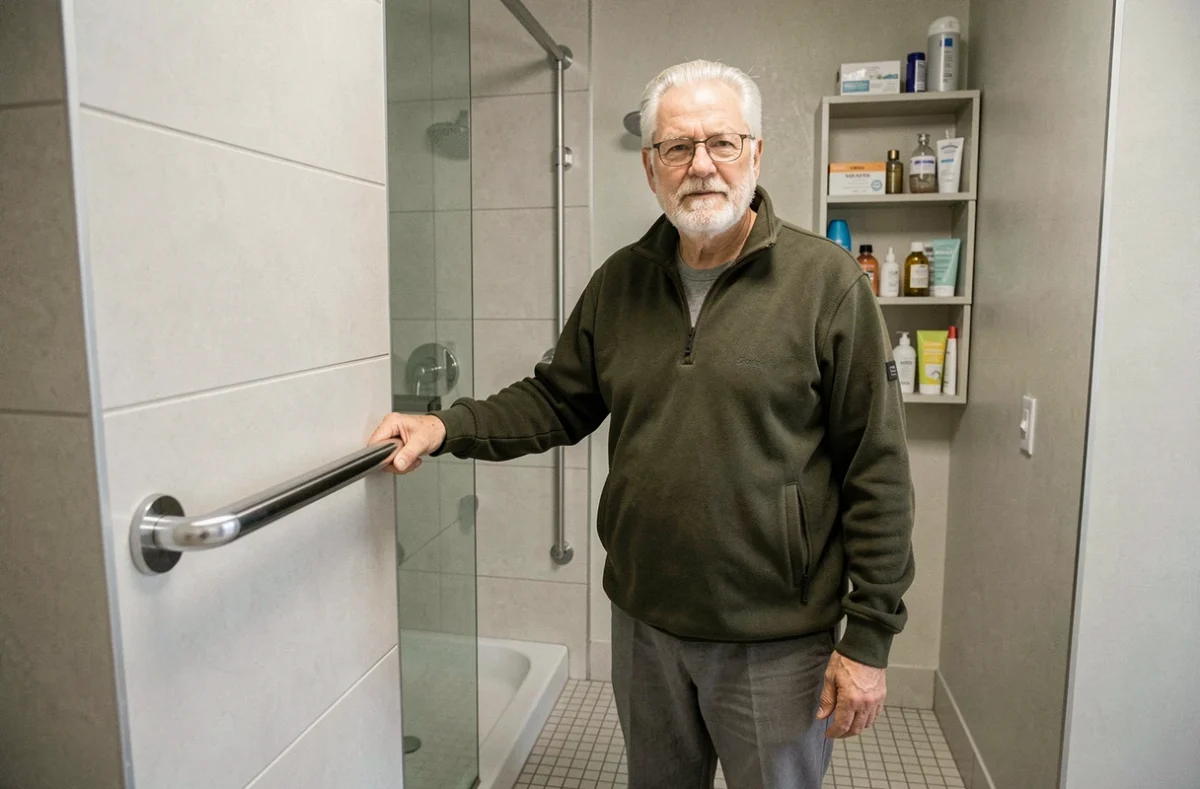
The bathroom remains the most accident-prone room in the home for an elderly person. Wet floors, stepping over the bathtub, lack of support points: risk factors accumulate in a space that is often narrow.
Three categories of equipment address these constraints:
- Wall-mounted grab bars, fixed into the wall studs and not by suction cups, which provide reliable support at the entrance of the shower or near the toilet.
- Folding shower seats or non-slip stools, which allow washing while seated and eliminate the risk of slipping during prolonged standing.
- Toilet risers with armrests, which reduce the range of motion required to stand up, particularly useful in cases of joint pain in the knees or hips.
A often overlooked point: the flooring is as important as the furniture. A standard bath mat, poorly secured, causes more falls than it prevents. Non-slip adhesive tiles or textured floor paints are a safer alternative.
Lift chair and adjustable bed: comfort that prevents dependence
The electric lift chair appears in almost all guides aimed at seniors, and for good reason. Its tilting mechanism assists the transition from sitting to standing, relieving the lower back and limiting the need for a caregiver.
Choosing a lift chair is not just about motorization. The seat depth, foam density, and backrest height must match the user’s morphology. An ill-fitted chair exacerbates postural pain instead of alleviating it.
In the bedroom, the height-adjustable bed (sometimes referred to as a medical bed in its full version) facilitates getting up in the morning, a time when the risk of orthostatic dizziness is highest. Recent models include retractable side rails and simplified remote controls.
Known limitation: variable reimbursement based on equipment
Wheelchairs have recently undergone changes in their coverage by health insurance. This change does not apply to small comfort items (lift chairs, ergonomic cushions, grab bars), often poorly or not reimbursed by Social Security. The out-of-pocket cost then depends on the mutual insurance, the APA, and the aid plan established by the department.
Fall prevention for seniors: equipment alone is not enough
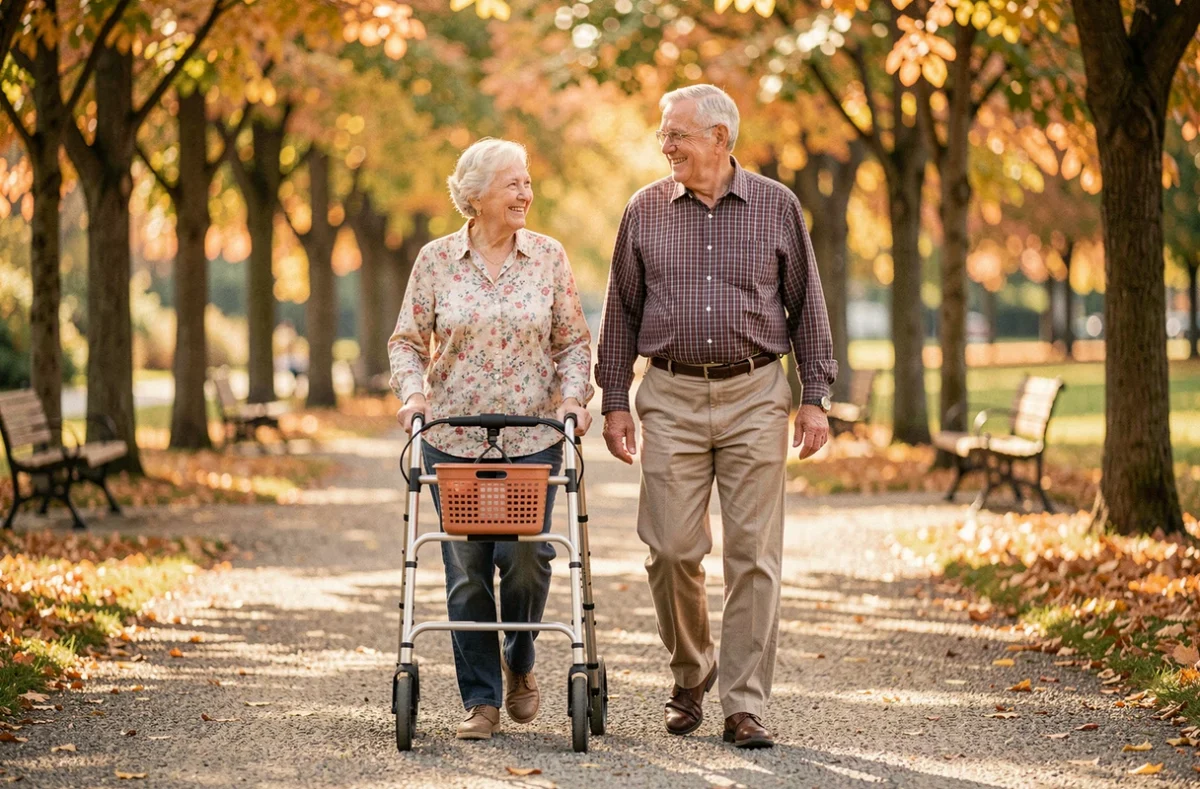
Adapting the home is a necessary but not sufficient condition. Recommendations shared by Aidons nos parents combine home modifications with several other factors:
- Regular vision checks, because inadequate optical correction increases the risk of missteps.
- Reviewing medication treatments, some causing drowsiness or dizziness.
- Maintaining appropriate physical activity (walking, balance exercises), which preserves muscle mass and proprioception.
- Choosing closed shoes with soft, non-slip soles, worn even indoors.
A perfectly equipped home does not compensate for undiagnosed balance loss. It is the combination of home adaptation, medical follow-up, and physical activity that effectively reduces the number of falls.
Home automation and sensors for seniors: between promise and on-the-ground reality
Home automation solutions (motion detectors, automatic lighting, night light paths) are gaining visibility in catalogs aimed at seniors. Smart lighting, which activates when passing through a hallway or between the bedroom and the toilet, meets a concrete need: nighttime falls represent a significant portion of domestic accidents.
The limitation lies in installation and maintenance. A poorly configured sensor generates false positives or remains inactive at the critical moment. Without technical support, connected equipment risks becoming unused a few weeks after purchase.
Teleassistance systems (pendant, bracelet, voice box) remain simpler to use and cover the primary need: alerting in case of a fall or malaise. Their monthly subscription is sometimes partially covered by the APA or by certain complementary pension funds.
The choice between advanced home automation and classic teleassistance depends on the person’s level of autonomy, the presence or absence of a caregiver on a daily basis, and the available budget after deducting aids. No equipment replaces an individualized needs assessment, ideally conducted with an occupational therapist or in a CICAT (information and advice center on technical aids).