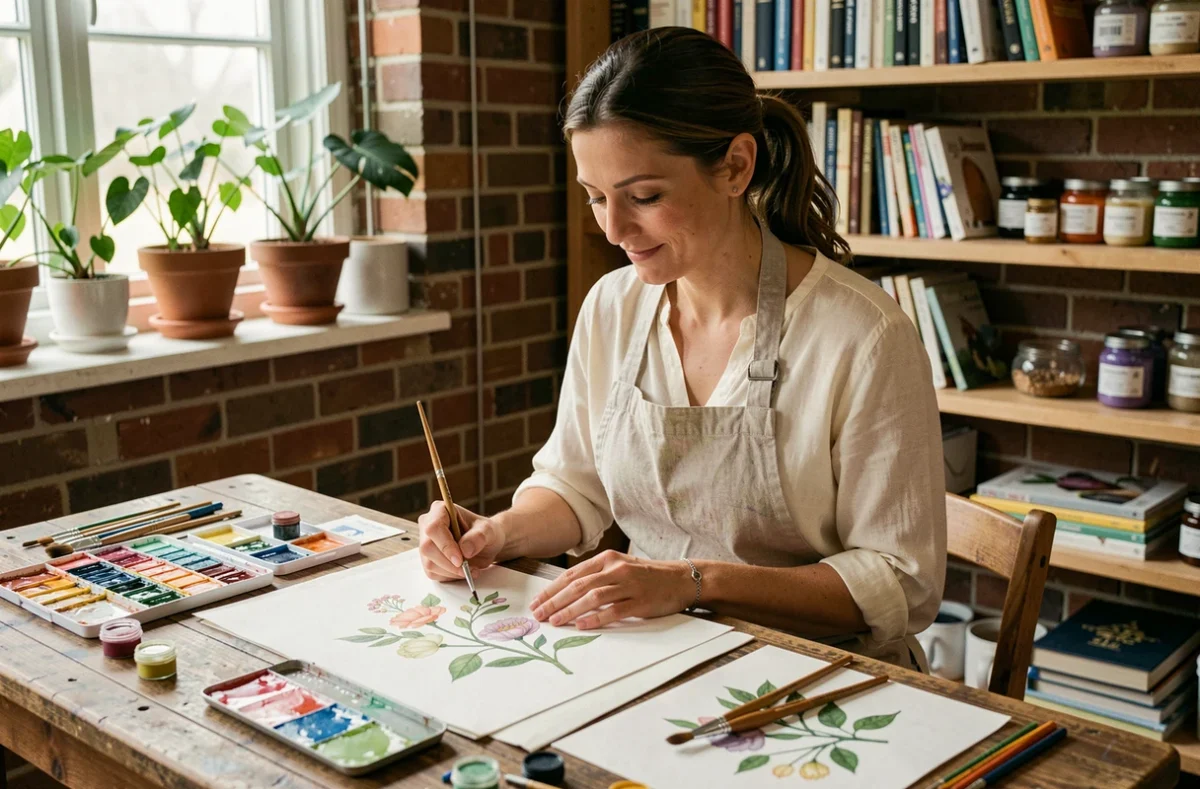
Choosing hobbies that enrich your daily life means understanding what you really want from an activity. Relaxation, learning, social connection, self-expression: these motivations call for different resources and produce different results. Rather than listing activity ideas, this article compares the practical criteria that determine whether a creative hobby will stand the test of time or be abandoned after a few weeks.
Creative hobbies and consistency: what the question of commitment reveals
Most guides to creative hobbies focus on an activity’s initial appeal. Drawing is popular because it is accessible, painting attracts people with its quick visual results, and embroidery appeals for its meditative quality. These qualities are real, but they don’t predict how consistently someone will practice.
A 2024 review published in Frontiers in Public Health on arts referral programs reports improvements in well-being, while noting that programs and methods remain varied. One practical finding stands out: in an exploratory group music therapy study, participants attended an average of 10.5 sessions out of a 42-session program. That’s just a quarter of the planned course.
This figure does not directly relate to a freely chosen individual hobby. It does, however, point to a broader mechanism: the gap between wanting to practice and being able to stick with an activity over time. When choosing your own hobby, this highlights a criterion that is often overlooked.
A hobby that fits easily into your week (light equipment, no need to travel, and the option of short sessions) is more likely to last than an activity with demanding logistics, even if the latter excites you more at first.
Among the hobbies featured on Blog 4 Web, this variety of formats is clear: some activities require very little equipment, while others call for a more structured setting.

Comparison table: choosing a creative hobby by key criteria
Comparing creative activities against objective criteria helps you look beyond your first impression. The table below compares five popular hobbies across factors that influence day-to-day practice.
| Activity | Starter equipment | Minimum session length | Can be done alone | Common group setting | Learning curve |
|---|---|---|---|---|---|
| Drawing | Pencil, paper | 15 minutes | Yes | Workshops, online classes | Gradual |
| Watercolor painting | Palette, brushes, heavyweight paper | 30 minutes | Yes | Outdoor workshops | Moderate |
| Embroidery | Hoop, thread, fabric | 20 minutes | Yes | Embroidery circles | Gentle |
| Creative writing | Notebook or computer | 10 minutes | Yes | Writing workshops | Variable |
| Textile repair (upcycling) | Sewing machine or needles, fabric scraps | 30 minutes | Yes | Repair cafés, community workshops | Moderate to demanding |
Drawing and creative writing stand out for their immediate accessibility and flexible scheduling. No expensive equipment, no location constraints. Embroidery offers the same flexibility, with a very modest initial investment.
Watercolor painting and textile repair require a dedicated space, even if only temporarily. This logistical factor matters more than you might think when you live in a small apartment or have only short blocks of free time.
Solo hobby or group activity: how the social setting affects creativity
The same 2024 review notes that a group setting can boost commitment just as much as the type of activity itself. A weekly painting workshop creates a gentle sense of obligation—a regular appointment that gives structure to the week. When you practice alone, discipline depends entirely on personal motivation.
This does not mean that group activities suit everyone. It helps to distinguish between two ways of practicing:
- Independent practice is a good fit if you’re looking for quiet time, have an unpredictable schedule, or care more about the creative process than sharing the result. Sketching in a notebook, writing, or doing embroidery in the evening can all meet this need.
- Structured practice works better if you struggle to stay consistent, learn by watching others, or see social connection as part of what you want from a hobby. Outdoor watercolor workshops, writing circles, and repair cafés can all provide this.
- Alternating between the two is also an option, and one that is often overlooked: practice alone during the week, then join a group once a month to compare your progress and discover new approaches.

Repair and upcycling: a creative hobby rooted in sustainability
ADEME describes the reuse and repair sector as taking shape, supported by repair bonus schemes across several industries, including textiles, toys, and sporting and leisure goods. This trend offers a practical angle when choosing a creative hobby: repairing or transforming an existing item combines technical learning with a useful result.
Unlike drawing or writing, textile repair produces a functional item. This tangible outcome motivates some people far more than a sketchbook. The growing availability of spare parts and reclaimed materials makes this activity easier to get into, even for beginners.
The main challenge is the learning curve. Mending a garment requires precise movements. Repair cafés and community workshops can help you get past this technical hurdle with occasional guidance and no long-term commitment.
Choosing a creative hobby that fits your daily life: what matters
Three factors emerge from this analysis. The first is how well the practical requirements fit your lifestyle: available space, minimum session length, and equipment to store. The second is whether you prefer to practice alone or in a group, which directly affects consistency. The third is the kind of outcome you want, from pure self-expression to making a tangible object.
A hobby that meets all three criteria within the limits of your real-life circumstances is far more likely to keep your creativity alive over time. Initial appeal matters, but it’s the day-to-day friction—or lack of it—that determines whether an activity truly enriches your life or remains an intention that never comes to fruition.