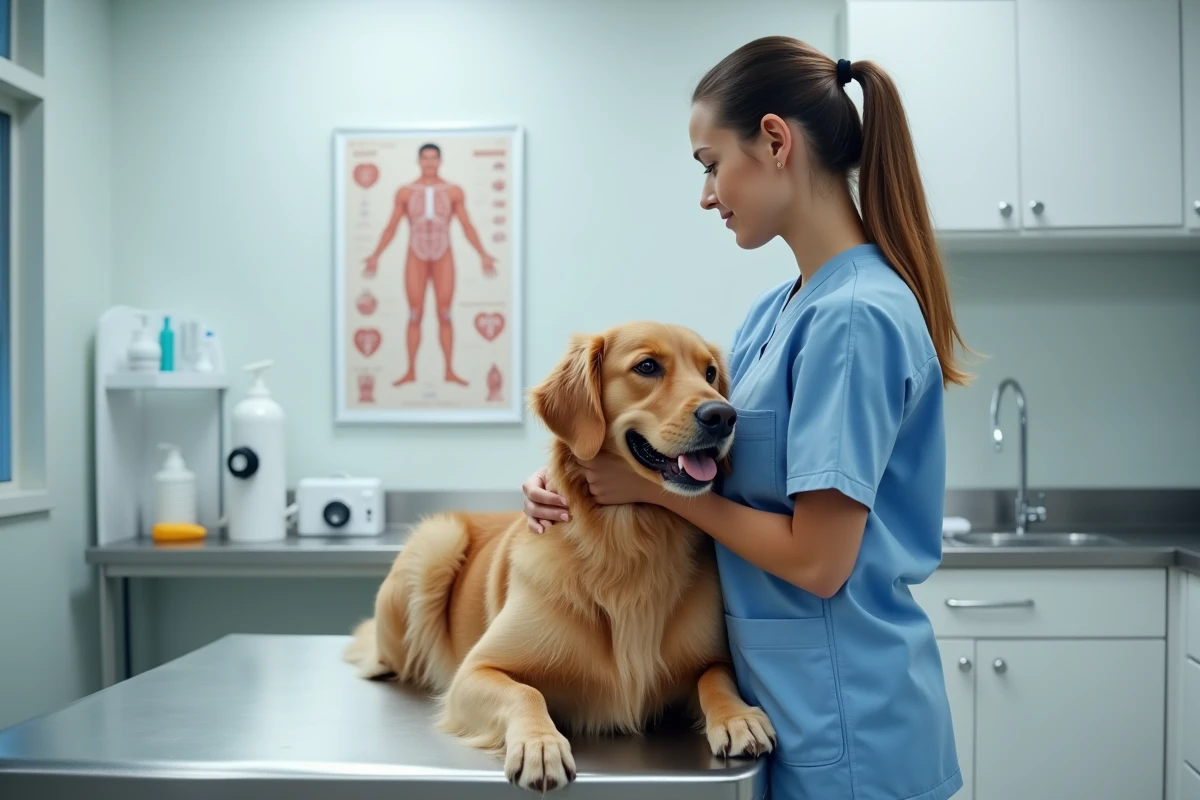
Pet health insurance remains optional in France, unlike liability insurance required for certain categories of dogs. This distinction, poorly understood by the majority of pet owners, conditions the entire logic of subscription. We observe a very low penetration rate in the French market, even as veterinarians increasingly recommend these contracts. Understanding the contractual mechanisms before signing helps avoid disappointments when the animal truly needs care.
Contractual exclusions in pet insurance: what the coverage does not include
A health insurance contract for dogs or cats is based on a risk selection principle. Pre-existing conditions, declared or detected before subscription, are systematically excluded. Hereditary or congenital pathologies are subject to specific exclusions in most plans, including the most expensive ones.
Specifically, a German shepherd diagnosed with hip dysplasia before signing the contract will never be reimbursed for care related to this condition. A French bulldog suffering from brachycephalic syndrome will face the same limitation. The exclusions specifically target breeds predisposed to identified pathologies.
We recommend subscribing as early as possible, ideally during the first months of the animal’s life. At this stage, the medical record is clean, which reduces the number of applicable exclusions. Before comparing offers, it is relevant to read health advice on X Anima to identify coverage criteria suitable for your situation.
Another often overlooked technical point is the waiting period. Most contracts impose a period, varying by insurer, during which no claims are covered. For illnesses, this period is generally longer than for accidents. An animal that falls ill during the waiting period will not be reimbursed.

Pet health insurance plans: deciphering coverage levels
The market offers three levels of plans with distinct mechanisms. Confusing them is akin to comparing third-party insurance with comprehensive car insurance.
- The accident-only plan covers only trauma (fractures, poisonings, bites). It excludes any illness, including common infections. Its cost is the lowest, but its scope is limited to accidental situations.
- The intermediate plan adds coverage for illnesses, with an annual reimbursement cap and partial coverage rate. This is the segment where the differences between insurers are most pronounced.
- The comprehensive plan includes a prevention package (vaccination, dental cleaning, anti-parasitics) in addition to curative care. The annual cap is higher, as is the reimbursement rate, but the monthly premium increases proportionally.
The choice of plan depends on the animal’s profile. An indoor cat, less exposed to accidents, benefits more from illness coverage than accident coverage. A large dog, statistically more prone to major surgical interventions, justifies a plan with a high cap.
Reimbursement rates and deductibles: the variables that change the bill
The displayed reimbursement rate does not reflect the actual out-of-pocket expense. This rate must be crossed with the deductible amount (fixed or proportional) and the annual cap. A contract showing a high reimbursement but capping at a low amount becomes useless in the face of major surgery.
We observe that the proportional deductible penalizes small acts (simple consultations, blood tests) while the fixed deductible impacts larger claims more. This structural choice, rarely highlighted by comparators, significantly alters the profitability of the contract over several years.
Pet health insurance and veterinary budget: the long-term calculation
The trade-off between personal savings and subscribing to a pet insurance contract is based on a probabilistic assessment. Over the lifespan of a dog or cat, the probability of a costly medical episode (tumor, orthopedic surgery, chronic kidney failure) is significant.
Insurance pools a risk that individual savings poorly absorb in the event of a major claim. A complex surgical intervention for a dog can reach several thousand euros. Without coverage, the owner faces a choice between debt and forgoing care.
The cost of premiums increases with the age of the animal. Subscribing late means paying more for reduced coverage (more exclusions related to medical history). It also exposes one to outright refusal beyond a certain age, as most insurers set an admission limit.

Liability and health insurance: two distinct contracts
Confusion persists between liability insurance, which covers damages caused by the animal to third parties, and health insurance, which covers the veterinary expenses of the animal itself. The former may be mandatory (for category 1 and 2 dogs). The latter remains entirely optional, regardless of the animal.
Some multi-risk home insurance contracts include liability for domestic animals. This does not exempt one from dedicated health insurance. The two products address claims of different natures and do not substitute for each other.
Subscribing to pet insurance: checks before signing
Before validating a contract, three points deserve a careful reading of the general conditions:
- The list of breed or pathology exclusions, which varies significantly from one insurer to another. Some exclude entire breeds, while others limit themselves to listed conditions.
- The conditions for termination and renewal. An annual contract that is tacitly renewable with an uncapped premium increase can become problematic in the medium term.
- The reimbursement method (sending invoices, teletransmission, application) and the actual processing time. A quick reimbursement eases the household’s cash flow, especially after hospitalization.
Comparing contracts solely on the basis of the monthly price is a common mistake. The premium differential between two plans is often justified by an annual cap, a waiting period, or a radically different scope of exclusions. A cheap contract that reimburses nothing at the critical moment protects no one.
The French pet insurance market is maturing, with increasingly segmented offers by species, breed, and lifestyle. Taking the time to dissect the guarantees before signing remains the best protection for your pet and your veterinary budget.