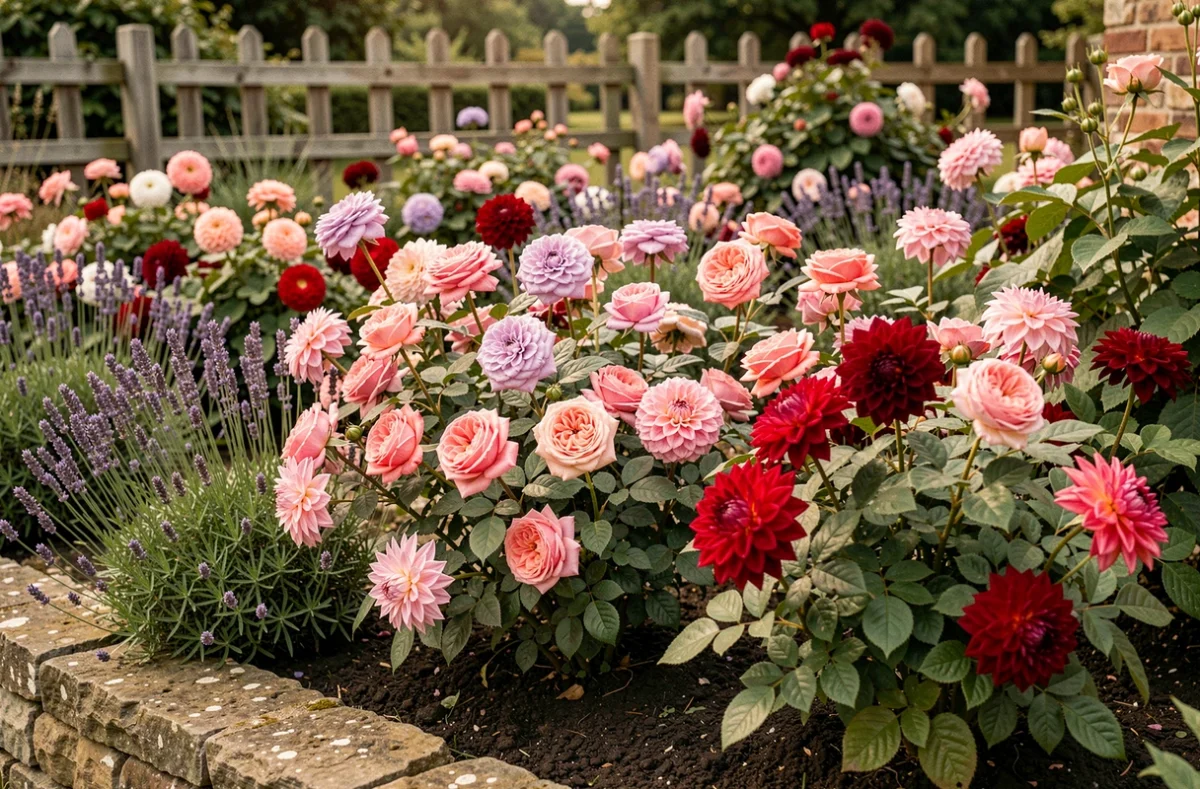
A flower bed that attracts pollinators in June but turns into cracked earth by August presents a problem that a simple list of “easy-care perennials” won’t solve. Creating a sustainable flower garden means balancing three factors from the outset: the drought tolerance of the flowers you choose, how accessible they really are to pollinating insects, and their regulatory status, since several common ornamental species are now on the European list of invasive alien plants.
Water-wise flower beds: varieties that thrive without frequent watering
It’s easy to assume that a plant labelled “drought-resistant” will settle in without any trouble. Feedback from local authorities shows that drought tolerance alone isn’t enough: underground obstacles (utility lines, fill, compacted soil) and prolonged heat spells can weaken even species known for their hardiness.
It starts with the soil. Dense clay soil holds water at the surface but suffocates roots. Sandy soil drains too quickly. Before choosing a single flower, assess the soil texture and drainage on site.
Professionals planting summer flower displays now favour gaura, catmint, Verbena bonariensis and certain shrubby salvias. Once well established, these perennials can tolerate dry spells lasting several weeks, provided they were watered properly during their first year.
- Catmint (Nepeta faassenii) thrives in full sun, attracts bees and regrows after a summer cut without any extra watering.
- Gaura (Gaura lindheimeri) flowers from June to October in well-drained soil, even poor soil, and only needs cutting back in late winter.
- Shrubby salvias (Salvia nemorosa, Salvia microphylla) provide a long flowering season, while their aromatic foliage helps deter pests.
- Sedum (Sedum spectabile) stores water in its leaves and provides valuable late-season nectar in September, when other flowers are fading.
It’s also worth mulching around flower beds with wood chips or volcanic rock. This reduces evaporation and means you can water less often, without a major investment.
Garden flowers and pollinators: choose single blooms over double-flowered cultivars
A double-flowered dahlia makes an impressive display in a vase, but in the garden it provides little food for insects. The extra petals reduce or even block access to the stamens and nectar. Single flowers are far more accessible to pollinators than their heavily double-flowered horticultural counterparts.
In practice, choose yarrow, echinacea and rudbeckia with single blooms. These perennials provide a succession of flowers from early summer until the first frosts, attracting hoverflies, bumblebees and butterflies.
One often-overlooked source of food is ivy. Its understated but abundant autumn flowers provide one of the last sources of nectar before winter. Avoid pruning it while it’s in flower, in September and October, to help late-season pollinators build up their reserves. You can keep its growth in check during the rest of the year without compromising this role.
Among the native species worth rediscovering, the jack-in-the-pulpit and its flowers are a good example of the potential of local plants often overlooked by mainstream garden centres. It needs little soil amendment and fits naturally into a woodland garden or shady border.
Invasive alien plants: rules to know before planting
Commission Implementing Regulation (EU) 2025/1422 added new species to the Union list, including Asian knotweeds and the paper mulberry. These listings have applied since 7 August 2025 and cover both sales and planting by private individuals.
In practice, this means you can no longer buy or introduce these species into your garden. Checking a plant’s regulatory status before buying it is now essential, especially for plants purchased online or exchanged between neighbours.
The paper mulberry (Broussonetia papyrifera) was already causing problems with invasive suckers and allergenic pollen. Its official listing confirms what local residents have observed for years: its ability to spread extends far beyond the boundaries of the original garden.
Removing plants that are already established requires care. Pulling up Japanese knotweed without taking precautions can spread rhizome fragments and make the problem worse. Contain the waste, don’t compost it, and don’t take it to a recycling centre without notifying staff.
Creating a flower bed for year-round interest: a succession calendar
A flower bed that attracts interest all year round relies on a carefully planned succession of blooms. The idea isn’t to plant “a bit of everything”, but to plan a succession of bulbs, perennials and annuals.
From February to April, bulbs get the season started: crocuses, daffodils and botanical tulips. They need to be planted in autumn in well-drained soil. Once they’ve finished flowering, leave their leaves in place for six weeks so the bulbs can replenish their reserves.
From May to September, perennials take over. Gaura, yarrow, echinacea and sage form the backbone of the flower bed. Add a few annuals (cosmos, zinnias) to fill any gaps in the first year while the perennials grow fuller.
From October to January, faded sedum retains its sculptural shape, while ornamental grasses (Miscanthus, Stipa) add volume. Ivy in flower continues to feed the last pollinators of the season.
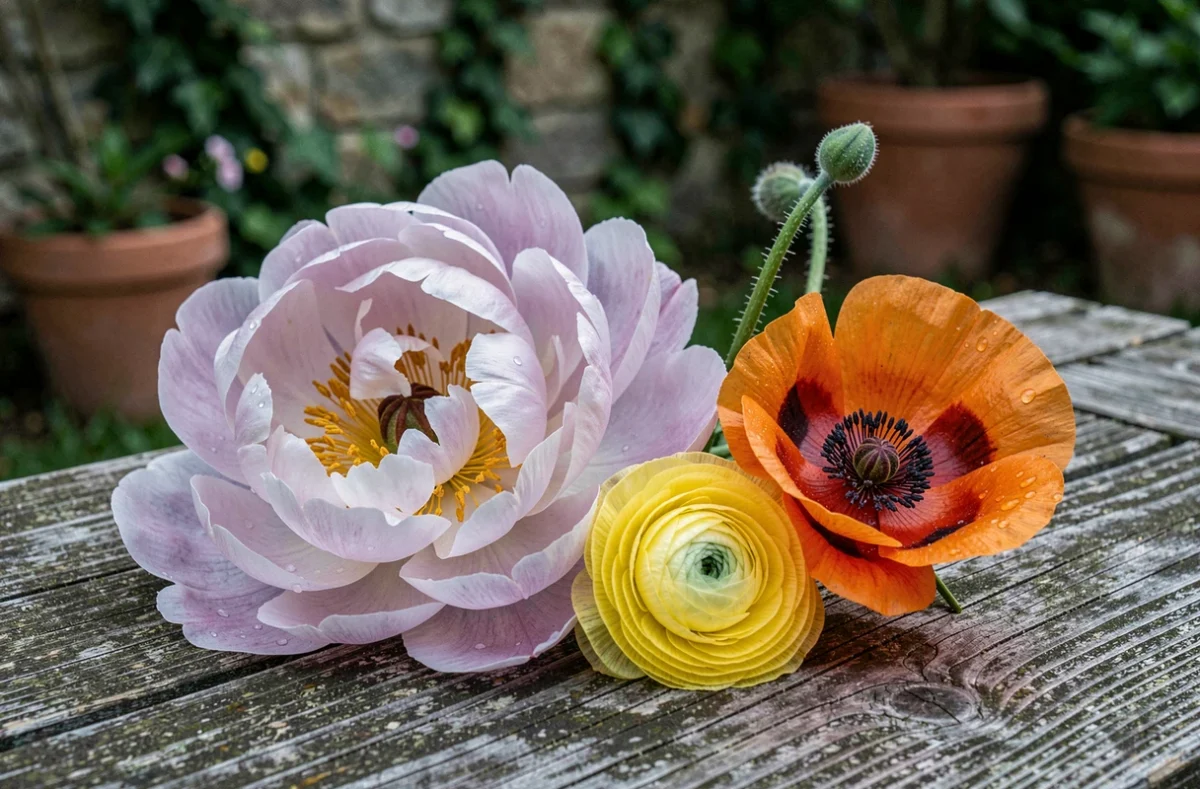
France’s decree of 4 September 2020 also requires sellers to provide information when selling plants that pose a risk of ingestion, pollen allergy, irritation or phototoxicity. This framework does not ban these plants from gardens, but it does require sellers to warn buyers. When planning a family flower bed, it’s best to take this information into account, especially if you have young children or pets.
Drought tolerance varies depending on the plant’s age, the depth of usable soil and exposure to wind. The same gaura may thrive in full sun in a sheltered garden but struggle on a windy slope, even with the same watering. Every site calls for flower choices tailored to its conditions, rather than relying solely on generic plant guides.