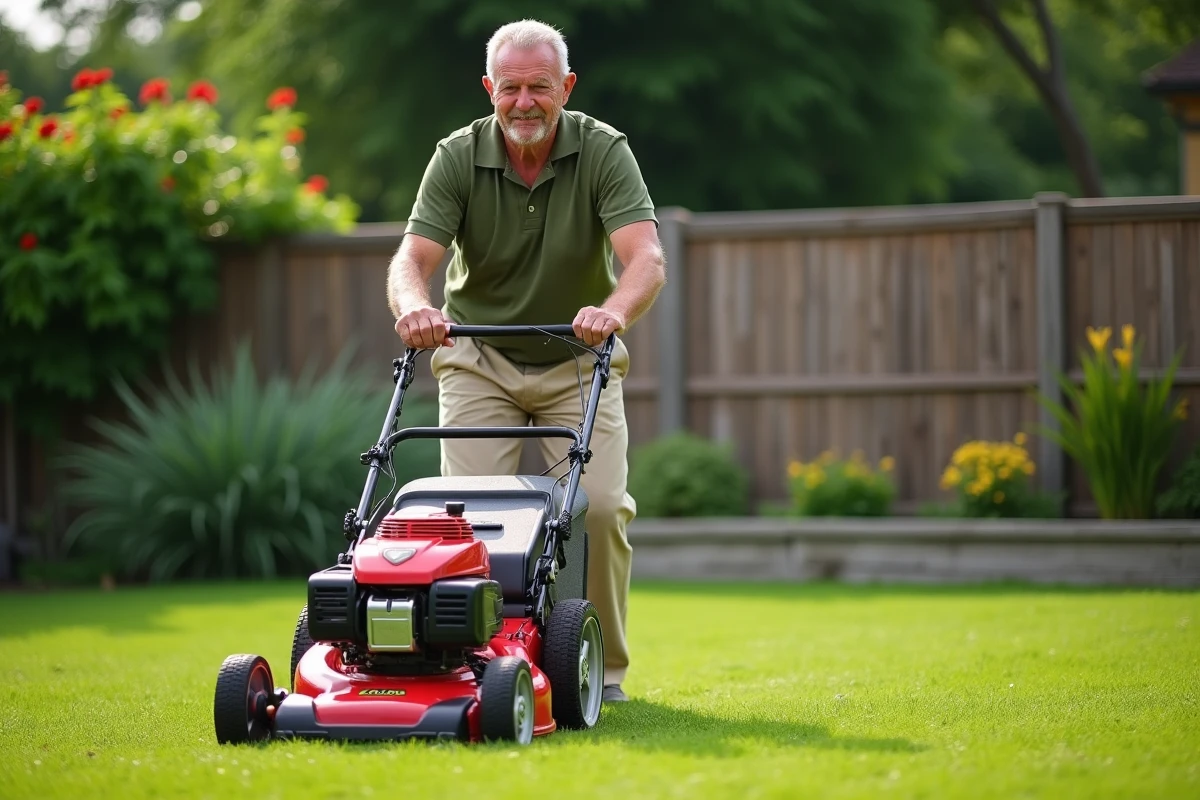
Viking no longer exists as an independent brand. Since the complete acquisition by STIHL, the Viking mower range has been gradually absorbed under the STIHL identity, with a pricing and technical repositioning that deserves careful examination. Here, we analyze what this affiliation really means for the mower buyer.
Engine and chassis changes under the STIHL brand
Mowers sold under the Viking name historically used Briggs & Stratton or Kohler engine blocks depending on the range, with stamped steel or reinforced polymer chassis. The transition to STIHL has led to a refocusing on in-house engines, particularly the EC motors and the STIHL AP and AK lithium-ion battery platforms.
This change has direct consequences for maintenance. Older Viking models with third-party combustion engines benefited from a multi-brand repair network. The new STIHL versions direct users to the authorized network, which is smaller but better trained on the brand’s specifics.
The aluminum cutting deck, present on high-end Viking models, has been retained on certain STIHL references (RM series). This is a strong point: an aluminum deck resists corrosion much better than stamped steel, which extends the machine’s lifespan by several seasons.
We recommend consulting a review of the Viking mower that details the correspondences between old Viking models and current STIHL references, as the transition has blurred the lines for many buyers.
Blade and cutting quality: an underestimated criterion for Viking mowers
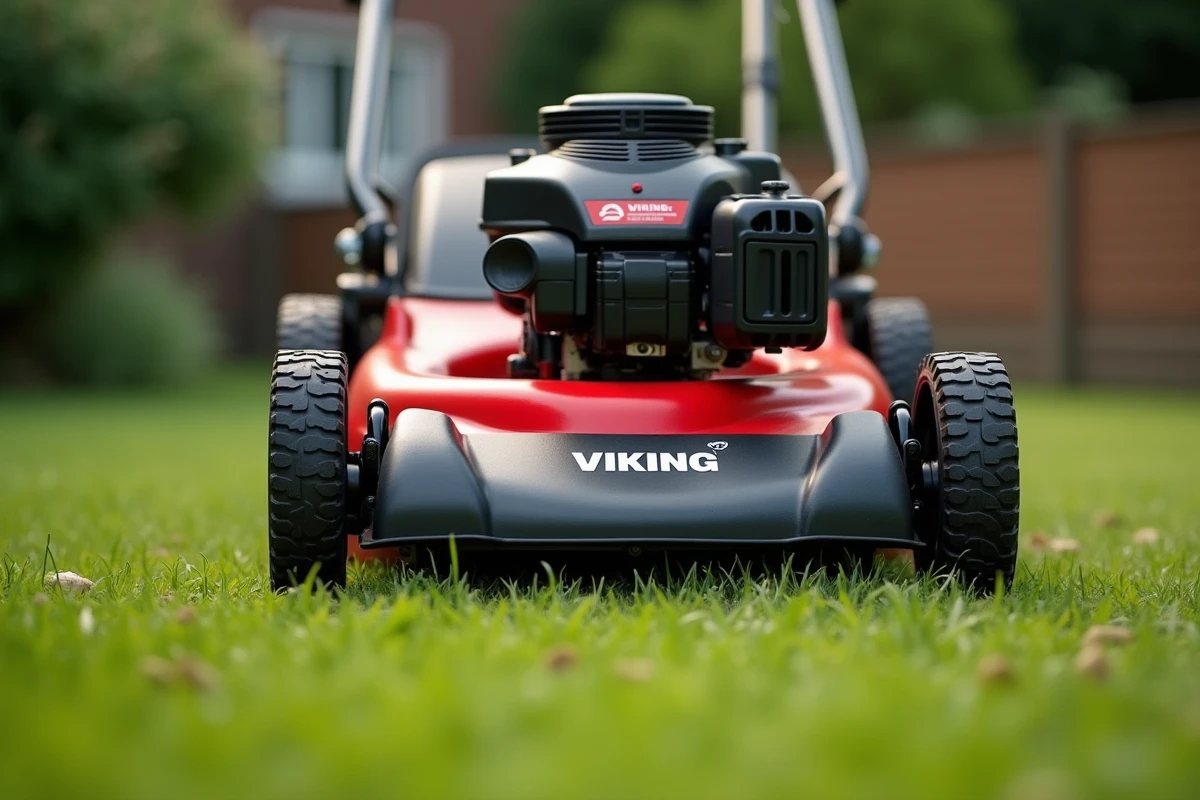
The cutting quality of a mower depends less on engine power than on the blade profile and peripheral speed. Viking mowers featured double-edged blades with blowing fins, a design adopted by STIHL on most of the current range.
This type of blade creates a vertical suction that stands the grass blades upright before cutting. The result is evident on fine grasses like fescue or English ryegrass: a clean cut, without tearing the tips. On ornamental lawns, this difference is visible to the naked eye compared to a basic blade without fins.
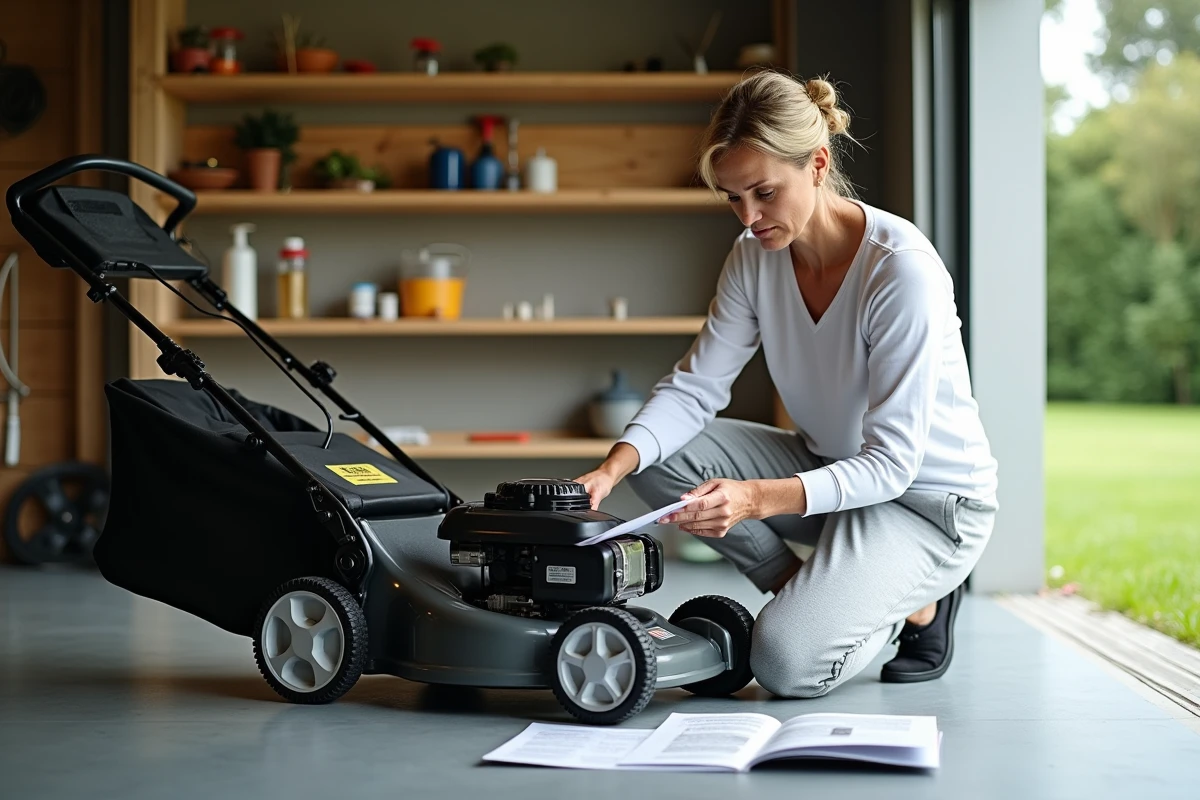
Sharpening remains the weak point for individual users. A poorly sharpened blade, even if well-designed, tears instead of cutting. We observe in the field that most Viking mowers brought to the workshop suffer not from a mechanical defect but from neglected blade maintenance.
- Sharpening recommended every 25 hours of mowing, or about twice per season for a medium-sized garden
- Replace the blade as soon as a crack or a slight wear appears
- Balance after each sharpening to avoid vibrations that prematurely wear the blade bearing
Viking spare parts: actual availability after the STIHL transition
The availability of spare parts is the true test of reliability for a gardening brand. In this regard, the situation for Viking mowers is mixed. Models produced after the acquisition by STIHL benefit from the well-stocked STIHL catalog at authorized dealers. Belts, blades, air filters, traction cables: lead times remain short.
For older Viking models (before the complete transition), certain parts specific to the chassis or transmission become harder to source. Decks, wheels, and height adjustment handles are the first to disappear from catalogs.
A point that consumer articles often overlook: the adaptation of parts between Viking and STIHL references is not systematic. A Viking air filter does not always fit the equivalent STIHL model, even if the product sheet seems identical. Checking the exact part number in the STIHL catalog avoids returns and wasted time.
Wear parts to monitor closely
- Drive belt for the wheels (traction): subject to wear on self-propelled Viking models, preventive replacement every two to three years
- Spark plug and air filter: seasonal maintenance is non-negotiable for combustion versions
- Battery on recent models: monitor residual capacity after three seasons of intensive use
- Blade bearing: often overlooked part, whose failure causes vibrations and uneven cutting
Viking mowers compared to competing brands: pricing and durability positioning
Historically, Viking was positioned in the mid-high segment, between entry-level brands (like GGP/Stiga) and professional machines from Honda or Husqvarna. The repositioning under STIHL has pushed prices up without the technical specifications always following in the same proportion.
In the battery mower segment, competition has intensified. EGO, Husqvarna, and Ryobi platforms offer comparable cutting performance with similar runtimes. The STIHL/Viking advantage remains the authorized maintenance network, denser in France than that of most battery competitors.
For self-propelled combustion mowers, the Viking MT (now STIHL RT) maintains a solid reputation. The hydrostatic transmission and welded chassis provide superior user comfort compared to variable belt models found in less specialized brands.
Buying a used Viking mower remains relevant as long as the condition of the cutting deck and the availability of spare parts for the exact reference are checked. A recent Viking model under STIHL warranty offers the best security, but a well-maintained older device can still serve for several seasons, provided critical parts are anticipated before they are removed from the catalog.