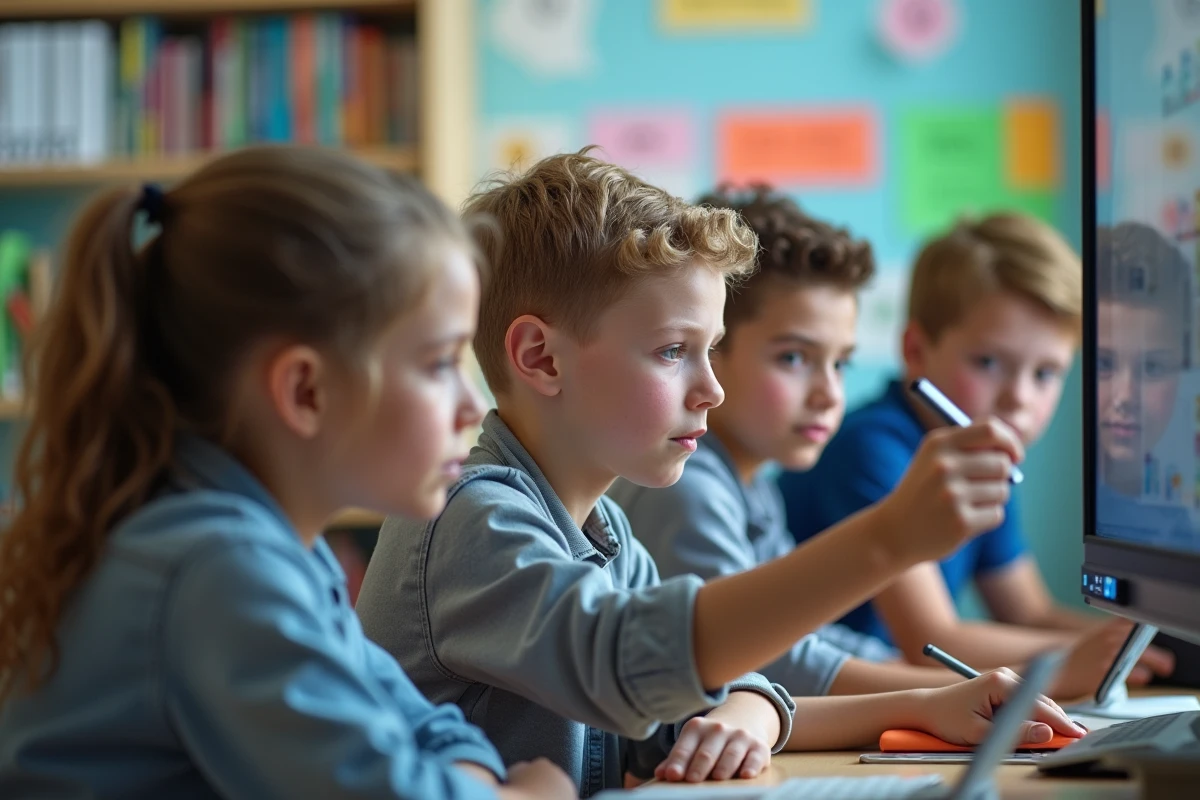
A raw figure to start with: over 250,000 teachers use Open Sankoré or OpenBoard each month, from primary to higher education. This is not a mere epiphenomenon; it’s a movement. Far from the buzz, these open-source software programs are gradually weaving a new framework for interactive teaching.
Version 1.6.3 of OpenBoard has marked the end of makeshift fixes and minor issues that plagued document management. This new breath of fresh air, palpable for many teachers, finally brings together the expected functions in a coherent environment that does not require juggling with proprietary hardware or software.
In the classrooms, the difference is felt unambiguously. Feedback now mentions smooth and seamless interactivity. Increased compatibility with recent systems, the disappearance of technical barriers: the change is also experienced daily, with one less concern for each prepared lesson or shared document.
Why are Open Sankoré and OpenBoard reshaping interactive teaching?
Stepping into a room equipped with an interactive whiteboard or an interactive screen is to measure the gap. Goodbye chalk and cloth. Welcome to a way of teaching where technology simplifies, unites, and energizes. With the open-source software Open Sankoré, the teacher orchestrates their lessons independently. Annotating, integrating images, projecting a video, or building a graph becomes natural, almost instinctive. Here, pedagogical freedom is no longer negotiable: it is experienced in front of every group of students.
Open source is not just a detail. It’s a way to move forward together: modifiable and shareable resources at will, transparent code, evolution driven by a community attentive to the needs on the ground. One frees oneself from constraints: no more expensive licenses or obstacles to using different hardware or operating systems. Whether the equipment is brand new or a bit dated, everyone has the same solid and adaptable foundation.
The scene is no longer static: students manipulate, draw, and test themselves on the whiteboard. Teachers and learners build the lesson together. And to learn more about Open Sankoré, simply consult practical guides, shared resources, or feedback. This permanent link between tools and pedagogical practices is what distinguishes Open Sankoré and its philosophy of educational technology.
Focus on OpenBoard 1.6.3: new features and real evolution
The arrival of OpenBoard 1.6.3 is anything but a simple update: revamped interface, streamlined menus, and smoother navigation. Now, the teacher knows where they are going, spots useful tools at a glance, saves time, and avoids the missteps that were lamented before.
What stands out: the management of on-screen objects becomes precise and intuitive. The offered palette has expanded: styluses, shapes, highlighters, integration of images or videos, everything is done effortlessly. The multi-page mode changes the game: one can easily structure their lessons, switch from one exercise to another, and nothing gets lost; everything can be reused later.
Stability: that’s the word that emerges from recent feedback. Documents, even heavy ones, open smoothly. Device detection, format support, layer and level management: yesterday’s issues are no longer a concern.
To better grasp what has changed, we can highlight these major advancements:
- Enhanced ergonomics: simplified interface, direct access to main tools.
- Pedagogical versatility: each teacher customizes their materials as they wish, according to the lesson or the group.
- Increased compatibility: OpenBoard now works with most models of interactive whiteboards and major software environments on the market.
This progress is also due to the vitality of the community: suggestions, corrections, and shared experiences forge a robust foundation, ready to continuously adopt the emerging needs of classrooms and teachers.
Installation, resources, community: starting your use of OpenBoard on the right foot
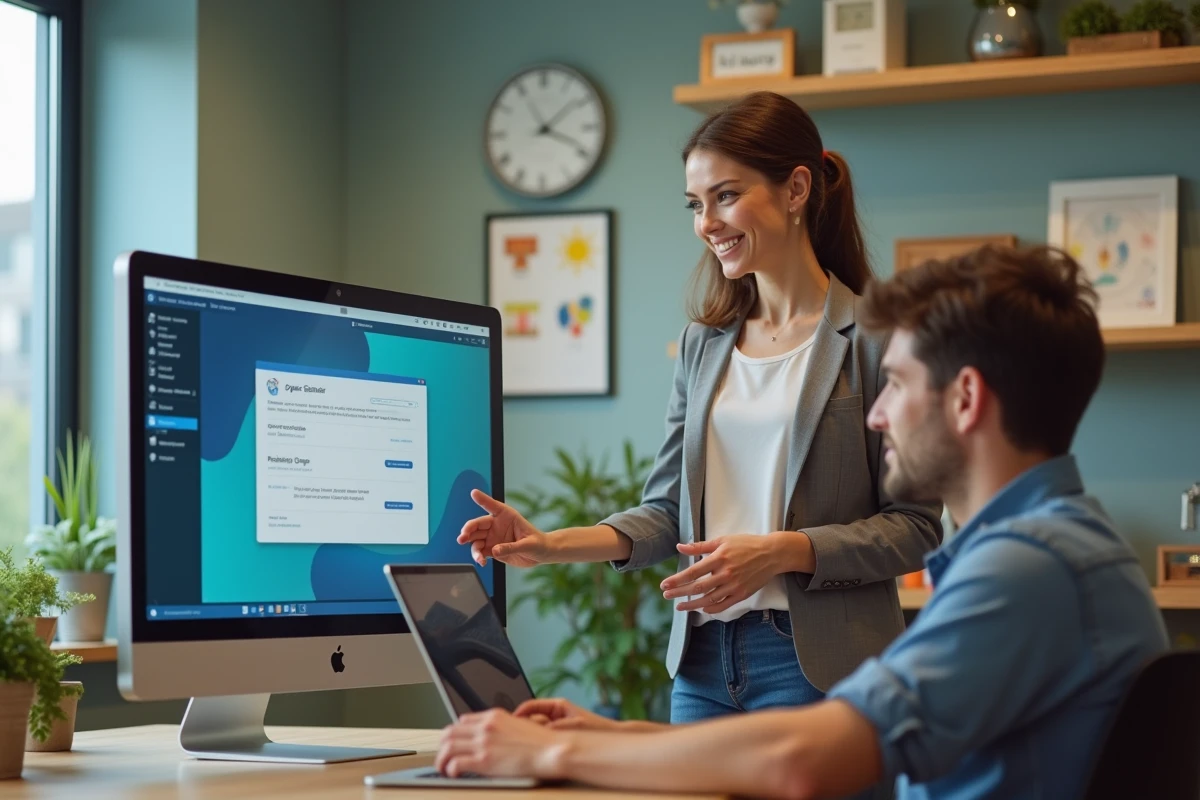
Launching Open Sankoré software or OpenBoard is not a puzzle. You download the official archive, install it on Windows, GNU/Linux, or Mac, and you’re off: no cutting-edge machine or complex installation required. On the connection side, the configuration of the screen or tablet as well as the projector is documented step by step among the resources on sankore.org.
You discover on the platform real treasure troves of open educational resources: everything under a Creative Commons license, everything reusable at your convenience. Here’s what you find while browsing the media library: ready-to-use exercises, annotatable diagrams, interactive sequences, or modules to enrich. This back-and-forth between personal adaptation and sharing is the DNA of truly open pedagogy. To embark confidently and progress, tutorials, guides, and user feedback mark the journey: from the classic whiteboard to the most advanced scenario planning, appropriation remains accessible to all.
It’s also the Sankoré community that keeps the whole thing alive and growing. Forums, support groups, networks: everyone can report a bug, submit an idea, or share a teaching creation. Universities, schools, independents: all contribute, all enrich. This collective intelligence sustains the dynamic over time and makes Open Sankoré a living educational project, capable of meeting the needs of the field as well as the desires for innovation.
In the background, another face of the classroom emerges: students no longer just listen; the digital tool triggers exchanges, interventions, and creativity. Open Sankoré and OpenBoard are gradually establishing a new way of teaching and learning. Line by line on the screen, knowledge is shared differently. Who would have bet that a simple software could have such an impact?