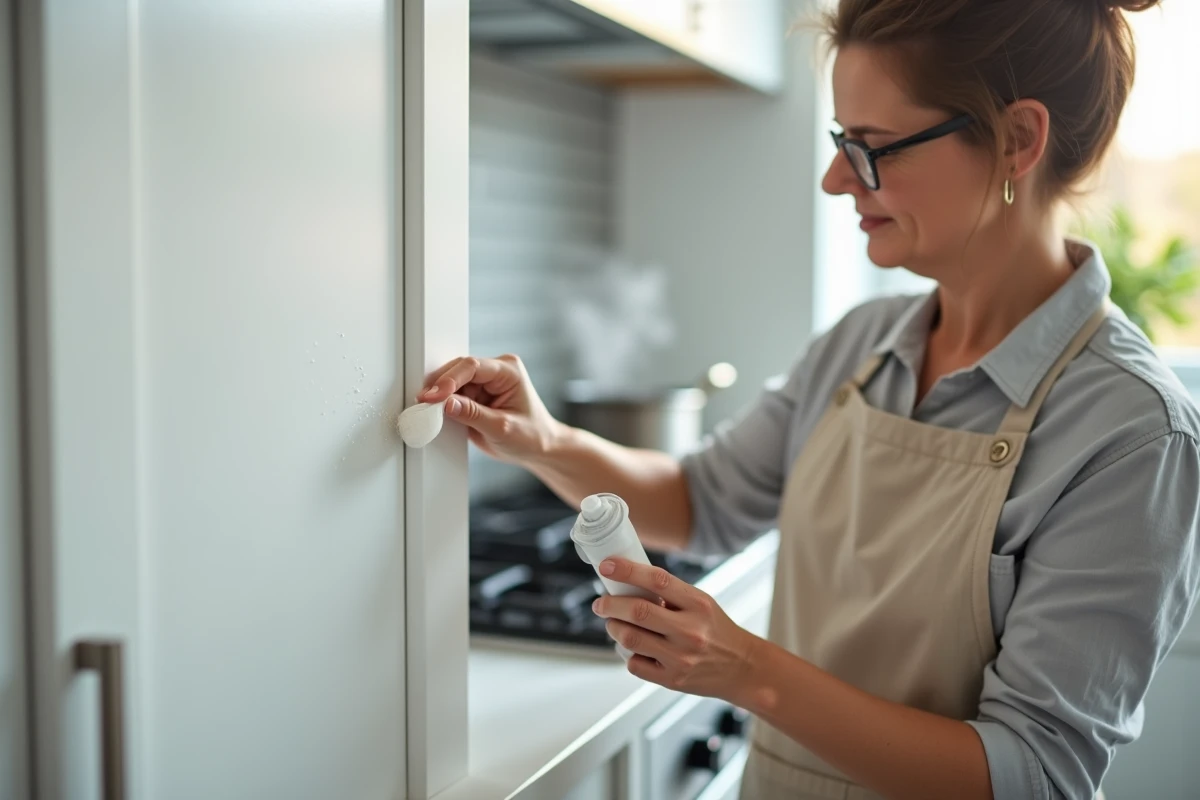
Cooking steam and humidity from the dishwasher attack kitchen furniture at specific points: edges of particle board panels, inner faces of upper cabinets, and the underside of the countertop. Protecting these areas requires understanding the mechanisms of water penetration in gaseous form and choosing the right treatment products in the right places.
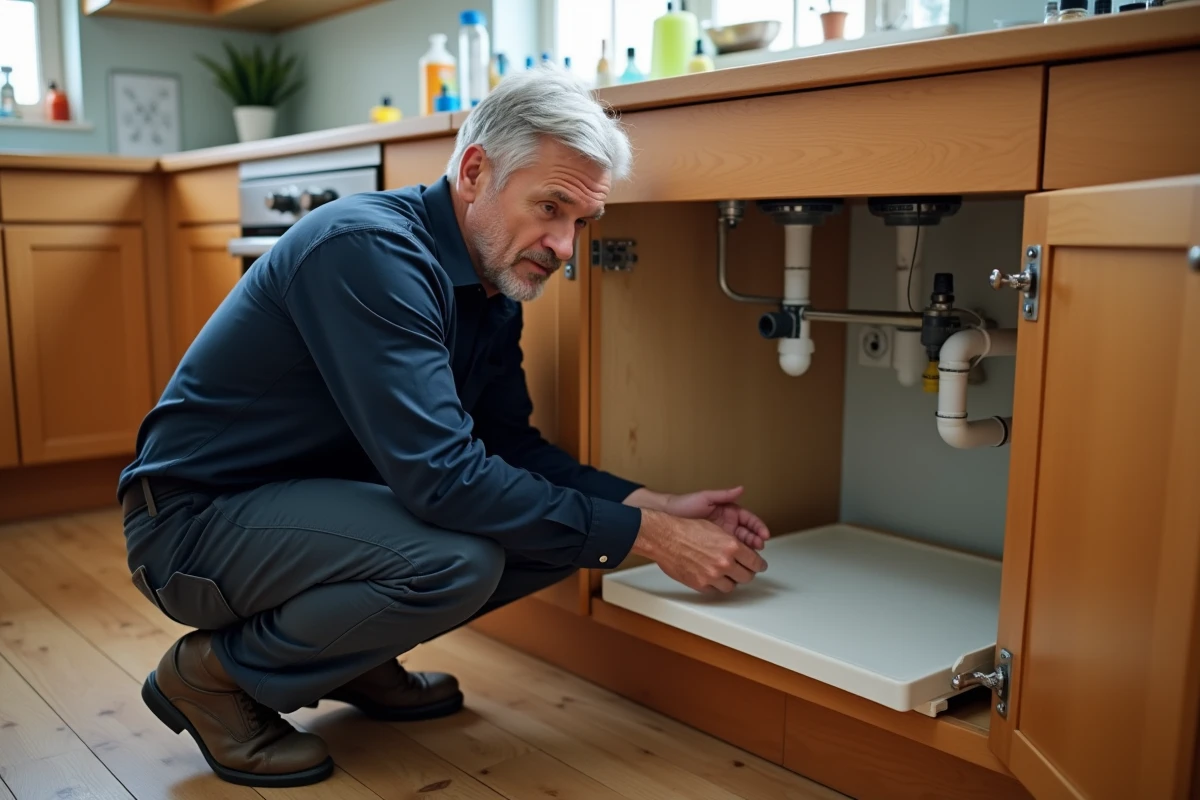
Adhesive vapor barrier under the countertop: the forgotten protection of the dishwasher
The underside of the countertop, just above the dishwasher, undergoes a concentrated flow of steam every time the door is opened at the end of the cycle. This specific point is primarily responsible for the swelling of edges and the delamination of laminates on particle board countertops.
We observe that most kitchen designers do not install protection in this area during installation. The problem appears after a few months of use when the edge begins to ripple.
DIY stores like Castorama and Leroy Merlin now sell self-adhesive vapor barrier strips with an aluminum face, designed to stick under the countertop. The Castorama model (Cooke & Lewis) measures 80 x 8 cm and is placed directly on the underside of the countertop, right above the dishwasher. Leroy Merlin offers an equivalent product, also self-adhesive. Installation takes a few minutes, without any special tools.
A method point often overlooked: ensuring good protection against steam for kitchen furniture also involves correcting usage habits. Opening the dishwasher door immediately at the end of the cycle to speed up drying concentrates all the steam under the countertop. Waiting a few minutes with the door ajar, or better yet, allowing the drying cycle to complete fully, significantly reduces water aggression on the edge and cabinet.
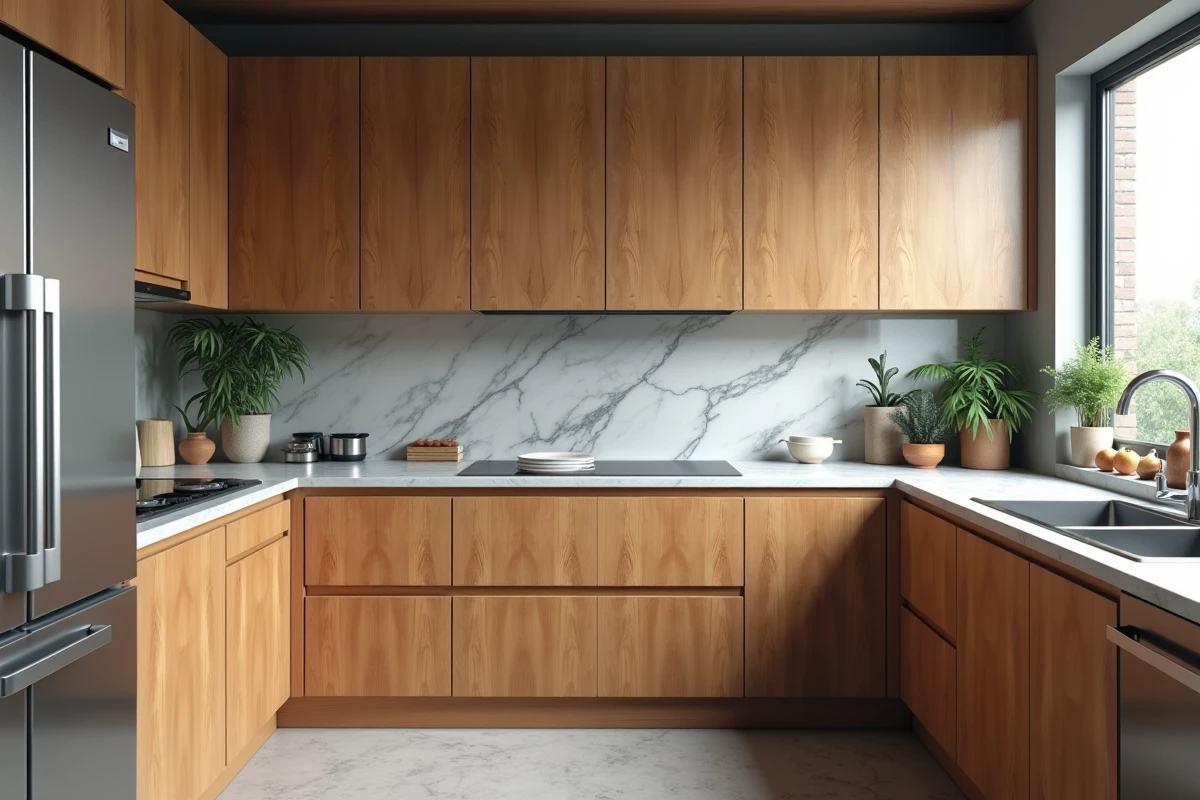
Water-repellent treatment for edges and inner faces: products and method
Kitchen furniture made of melamine or laminate panels is protected on their visible faces, but the cut edges and inner faces often remain untreated. It is through these untreated areas that humidity penetrates the particle board.
We recommend systematically treating edges exposed to steam with a polyurethane varnish or a water-repellent wax. Polyurethane varnish provides a more durable barrier than wax, but it requires light sanding beforehand and drying time between coats.
Priority areas to treat
- The lower edge of the countertop on the dishwasher and sink sides, where water splashes and steam are most frequent
- The inner face of the bottom of upper cabinets located above the cooktop, a zone of direct condensation
- The edges of the lower cabinet doors near the sink, subjected to repeated splashes
On solid wood, a specific cleaner followed by a protective oil (hard oil or oil-wax) forms a film that limits the penetration of steam without blocking the hygrometric exchanges of the wood. On melamine, polyurethane varnish remains the most reliable solution for exposed edges.
Ventilation above the cooktop: sizing the extraction flow
Without proper mechanical extraction, no surface treatment is sufficient. Cooking steam rises vertically and hits the underside of the upper cabinet. If the hood does not capture this flow before it reaches the cabinet, condensation settles in.
The technical point that consumer guides omit: the distance between the cooktop and the bottom of the upper cabinet (or hood) conditions the effectiveness of the extraction. Too close, the hood heats up and so does the cabinet. Too far, the steam flow escapes sideways before being captured.
For an induction cooktop, we recommend maintaining the distance recommended by the hood manufacturer, usually indicated in the manual. For a gas cooktop, this distance is greater due to the radiant heat from the burners.
Signs of insufficient extraction
- Visible condensation on the underside of the upper cabinet after each prolonged cooking session
- Appearance of mold in the interior corners of the cabinet above the cooktop
- Gradual delamination of the melamine coating on the bottom of the upper cabinet
- Persistent smell of humidity upon opening the cupboard
If these signs appear, checking the actual flow rate of the hood and cleaning the grease filters is the first corrective action. Clogged filters can significantly reduce the extraction flow rate.
Protective film and backsplash: protecting the wall and the cabinet at the same time
The area between the countertop and the upper cabinets (the backsplash) acts as a barrier against splashes and steam. An unprotected wall in this area allows humidity to migrate to the back of the cabinets through capillarity.
A properly grouted glass, stainless steel, or tiled backsplash blocks this migration. Self-adhesive PVC backsplashes protect the wall from splashes, but their vapor tightness remains limited over time, especially at the joints.
For upper cabinets whose bottom touches the wall, a vapor barrier film placed between the back of the cabinet and the wall prevents moisture transfer. This film is available in rolls in the insulation sections of DIY stores. It can be cut with a utility knife and fixed with staples or double-sided adhesive.
Regular maintenance of the silicone joints between the backsplash and the countertop completes the setup. A degraded joint allows water to infiltrate behind the countertop and reach the cabinets from below. Replacing a silicone joint takes less than an hour and protects the structure of the cabinet for several years.
Protecting kitchen furniture against steam and humidity relies on three combined actions: installing vapor barrier strips at points of direct exposure, treating unprotected edges and inner faces, and ensuring steam extraction sized to the cooking volume. Neglecting any one of these three aspects accelerates degradation, even if the other two are correctly implemented.