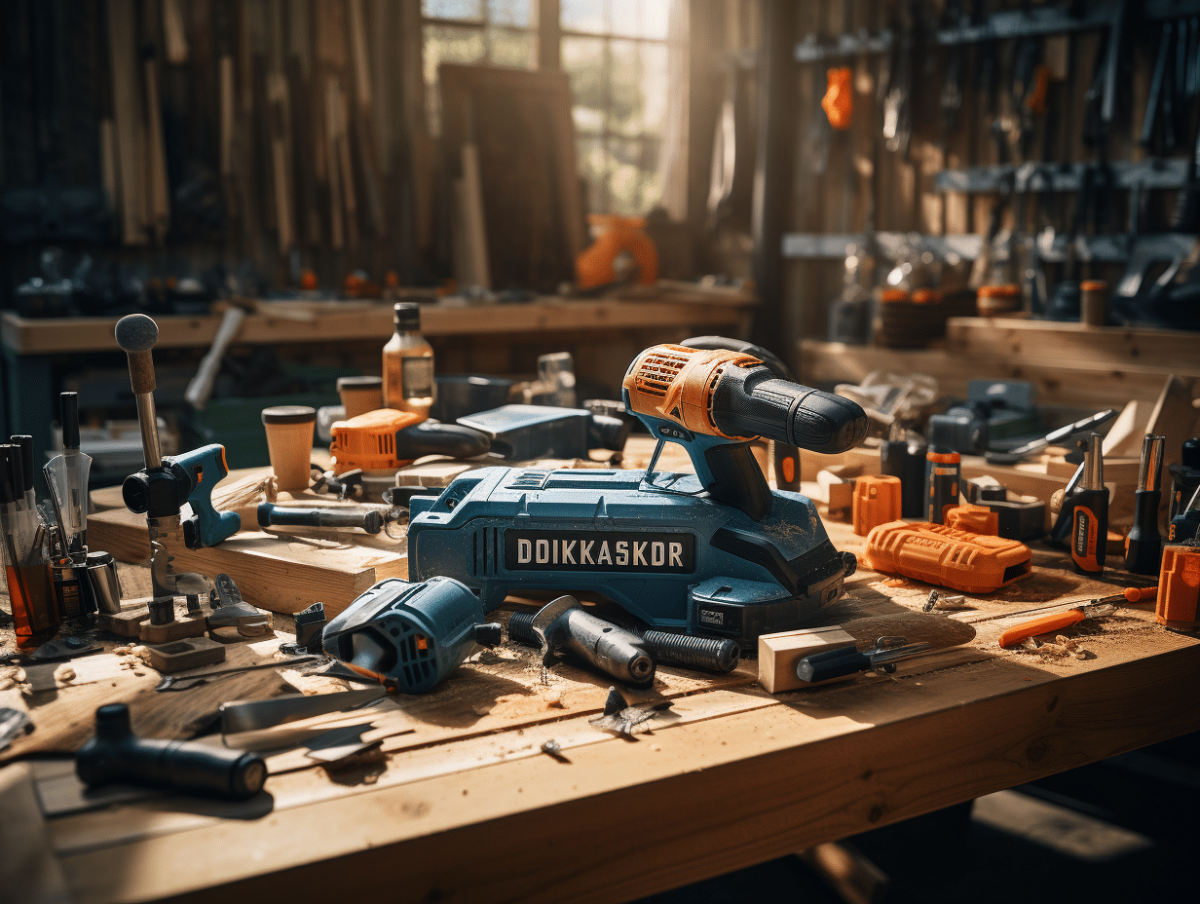
The DIY industry in France is experiencing considerable growth, driven by an increasing consumer demand for efficient and accessible tools. In this competitive landscape, Parkside, a brand distributed by Lidl, stands out with its strategy of competitive pricing and a varied range that meets the needs of both amateur and experienced DIY enthusiasts. The company relies on manufacturing often outsourced in Europe and Asia, while ensuring to maintain a quality standard appreciated by its clientele. Exploring its production, distribution, and quality management methods reveals the keys to its success in the French market.
Parkside’s Positioning in the French Tool Market
At the heart of the competition that energizes the tool sector in France, Parkside distinguishes itself with a unique business model. Lidl’s brand specializing in DIY tools, Parkside benefits from increased notoriety thanks to its association with renowned ambassador Arnold Schwarzenegger. Parkside, of German origin, is synonymous with rigor and reliability, values that resonate with a demanding clientele. Marketed not only through Lidl stores but also via online platforms such as Amazon, Cdiscount, and ManoMano, the brand establishes its presence in the market by making itself accessible to a broader audience.
In terms of service, Lidl manages a set of post-purchase services for Parkside that enhances user trust: a responsive after-sales service, a solid warranty, and a well-oiled spare parts replacement system. These services, articulated differently according to regions with specific delivery policies in Belgium and France, contribute to building a robust brand image that is close to its customers. After-sales service and warranty are significant assets in consumers’ choices.
The synergy between Parkside and Lidl translates into a strategy of prices that challenge the competition, making Parkside tools particularly attractive. The manufacturing of tools, relying on shared molds with brands like Bosh pro and Einhell, as well as collaboration with partners such as Kompernass and Grizzly Tools, reflects a clever technical and commercial strategy. This positioning allows Parkside to align with market quality standards while maintaining affordable prices for its users. The brand thus finds its balance in a market where quality and price remain the essential decision-making levers.
Technical and Strategic Comparison of Parkside Against Other Manufacturers
In a comparative analysis of tool manufacturers, the question of technical finesse and commercial strategy takes on a crucial dimension. Parkside, by relying on shared molds with Bosh pro and Einhell, illustrates an approach of resource pooling that allows it to offer products that are both affordable and of quality. This approach, far from being a mere choice of convenience, is a strategic response to the need to combine competitiveness and innovation.
The partnership with firms such as Kompernass and Grizzly Tools embodies Parkside’s desire to integrate into a network of strategic partnerships. These collaborations give the brand adaptability and agility in the development of new products, while benefiting from the expertise and know-how of its partners. This synergy is a significant asset against competitors who sometimes opt for a more isolated strategy.
Parkside’s presence on online platforms such as Amazon, Cdiscount, and ManoMano indicates a willingness to fully embrace the digitalization of distribution. This strategic orientation allows Parkside to maximize its visibility and facilitate access to its products, thus aligning with the growing trend of e-commerce that is reshaping the contours of retail tool sales.
Against Bosh pro and Einhell, well-known brands of professional tools, Parkside asserts a differentiated positioning. The brand, while drawing inspiration from their quality standards, stands out with an aggressive market penetration strategy, relying on competitive prices and increased accessibility. This strategy allows it to target a segment of consumers attentive to the quality-price ratio, without neglecting professionals seeking economical alternatives.