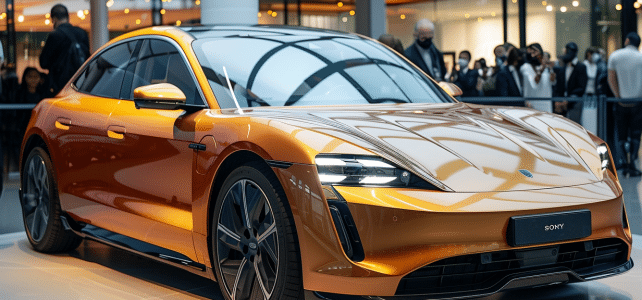
The year 2023 marks a period of intense transformation in the automotive sector, where technological innovation and evolving consumer expectations are reshaping the contours of the industry. Manufacturers are unveiling increasingly electrified models, responding to the growing demand for environmentally friendly vehicles. The transition to electromobility comes with challenges, particularly regarding range and charging infrastructure. At the same time, bold designs and smart features capture attention, while some innovations, sometimes deemed gimmicks, provoke skepticism and criticism. In this changing landscape, favorites coexist with disappointments.
Automotive Trends for 2023: Notable Innovations and Technologies
The new Renault Scénic electric stands out as a flagship in the electric cars category. With its synchronous electric motor featuring a wound rotor delivering 220 hp and a torque of 300 Nm, it positions itself in the automotive news as a response to the needs for sustainable mobility. Its battery of 87 kWh net ensures an impressive range of 625 km, while its top speed reaches 170 km/h. With a starting price set at €46,950 and zero CO2 emissions, this model asserts itself as the choice of Guy L’Hospital, praised for its family-friendly profile.
The Toyota Prius, on the other hand, reinvents itself in a hybrid version. Combining a 1987 cm3 gasoline engine with an electric motor, it boasts a total power of 223 hp and a torque of 190 + 208 Nm. Although details on range and battery remain unspecified, the Prius promises reduced CO2 emissions, between 11 to 16 g/km, and a top speed of 180 km/h. Priced at €43,900, this Toyota innovation has become more appealing to Camille Pinet, who sees it as a notable evolution in terms of economy and environmental policy.
In the electric performance segment, the MG4 X Power stands out with its two synchronous electric motors with permanent magnets, offering a power of 435 hp and a torque of 600 Nm. Despite a more modest range of 310 km, due to its 61.7 kWh net battery, this electric sports vehicle reaches a top speed of 200 km/h. With a competitive price of €40,490 and no CO2 emissions, the MG4 X Power has caught the attention of Jean-Eric Raoul for its remarkable performance-to-price ratio in the French automotive market.
These models mark the year with their technological advancements, but the question remains: Which car to avoid in 2023? A debate that engages experts and consumers as environmental performance becomes an essential criterion for choice.
Automotive Trends for 2023: Models That Disappointed
The off-road vehicles segment has not escaped criticism this year, particularly with the controversial arrival of the Ineos Grenadier. Despite the praises from Nicolas Valeano for its undeniable off-road capabilities, this model shows disappointing ecological performance with CO2 emissions ranging between 286 and 317 g/km. Powered by a 6-cylinder inline diesel engine of 2993 cm3, delivering 249 hp and a torque of 550 Nm, the Ineos Grenadier suffers from its anachronism in a market seeking sustainability. Its high price of €73,140 adds to the disillusionment, questioning its relevance in the French market.
The Porsche 911 Dakar, for its part, has raised questions about its place in the luxury sports cars category. Mélina Priam, charmed by its adventurous look, cannot ignore its CO2 emissions of 256 g/km, a significant figure for a vehicle that aims to be at the forefront of innovation. Equipped with a 6-cylinder flat gasoline engine of 2981 cm3, the 911 Dakar develops a power of 480 hp and a torque of 570 Nm. But with a price of €226,689, this model raises the question of coherence between performance and environmental consciousness.
These disappointments occur in a context where ecological transition increasingly weighs on purchasing decisions. Consumers, now more informed, tend to favor vehicles that combine environmental respect and technological innovation. High CO2 emissions and prohibitive prices become barriers to acquisition for a growing segment of the population.
Environmental performance thus becomes a determining criterion, relegating high carbon footprint models to an increasingly marginal status. Manufacturers are called upon to double their ingenuity to reconcile performance, comfort, and ecological responsibility expectations. The current situation imposes a deep reflection on the future of the automobile, where innovation must rhyme with environmental preservation to attract a knowledgeable and demanding audience.