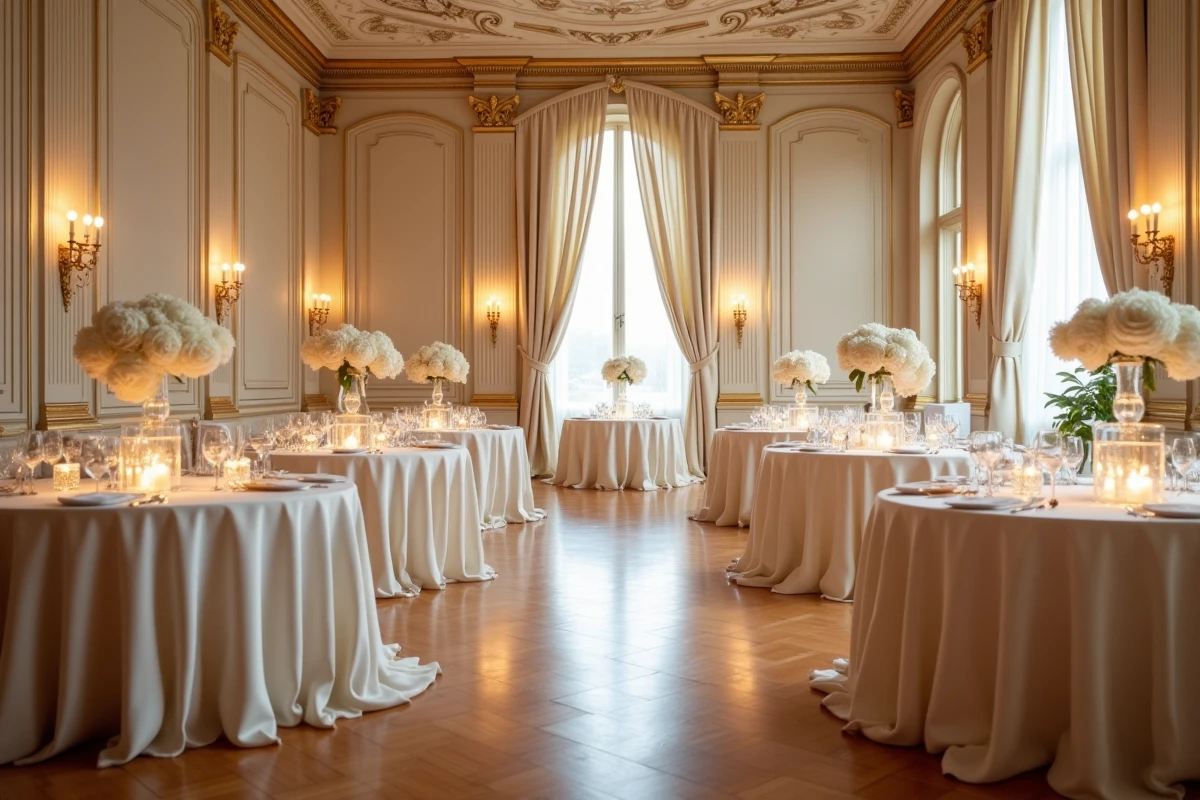
Philippe Jaroussky, the French countertenor born in Maisons-Laffitte, celebrated his marriage with a discretion that contrasts with the usual pomp of the lyrical world. The ceremony, described as minimalist and spiritual, reflects a personal choice made by the artist, far from the spotlight and flashy announcements.
Minimalist Ceremony and Spirituality: What the Format of Jaroussky’s Wedding Reveals
Where other lyrical artists opt for lavish events, Philippe Jaroussky took the opposite approach. American soprano Joyce DiDonato made a lasting impression with an opulent celebration in 2024. Jaroussky, on the other hand, favored a minimalist approach influenced by his Catholic roots.
This choice is not trivial for an artist whose repertoire is deeply rooted in baroque sacred music. The connection between the spiritual dimension of his private life and his work as a performer is evident in this coherence: no decorative excess, no media guest list, but an intimacy reminiscent of the atmosphere of a chamber cantata.
To learn more about Philippe Jaroussky’s private life, several testimonies shed light on the artist’s personal journey beyond the stage.
Countertenor Max Emmanuel Cencic mentioned in the podcast Voix intimes on France Musique an “increased emotional stability post-marriage,” a statement that resonates with Jaroussky’s journey. The civil union seems to provide lyrical singers with an anchor that the touring life constantly tests.
Philippe Jaroussky’s Wedding and Baroque Repertoire: A Rarely Explored Link
The most stimulating question surrounding this wedding concerns neither the location nor the guest list. It revolves around the influence this union might have on Jaroussky’s musical programming choices in the upcoming seasons.
The baroque repertoire is rich with works that explore marital love with a depth that the public rarely associates with this period. The operas of Handel, Monteverdi, or Vivaldi contain duets and arias dedicated to fidelity, tenderness between spouses, and romantic reconciliation.
Baroque Works on Marital Love: A Programming Ground
Several avenues emerge for a performer wishing to revisit this repertoire in light of personal experience:
- Bach’s secular cantatas, particularly those composed for weddings, offer vocal material suited to the countertenor range and are rarely programmed in recitals
- Monteverdi’s The Coronation of Poppea, whose final duet between Nero and Poppea remains one of the most beautiful love passages in baroque opera, would allow Jaroussky to tackle a role filled with marital ambiguity
- Handel’s oratorios exploring biblical couple figures (Esther, Solomon) constitute a terrain where spirituality and marital love naturally overlap
An artist going through a major personal phase does not program in the same way. The emotional stability described by his peers could translate into more intimate, riskier repertoire choices, as they are less spectacular than the bravura arias that have made his name.
Discretion of Lyrical Artists: Philippe Jaroussky and the Trend of Private Weddings
Jaroussky’s discretion is part of a broader movement within the French lyrical world. Private ceremonies without media coverage are becoming the norm among classical performers, in contrast to show business practices.
Since January 2026, a simplification of procedures for marriages of European citizen artists has facilitated cross-border celebrations without excessive administrative delays. This regulatory evolution makes possible unions celebrated in a setting chosen for its emotional value rather than logistical.
Why Countertenors Protect Their Privacy
The countertenor vocal register has long raised personal questions from the public and the media. This intrusive curiosity partly explains the protective reflex developed by artists of this voice type.
Philippe Jaroussky has built his career on a clear separation between stage and personal life. His rare and measured comments on his marriage have transcended the lyrical world to fuel a broader reflection on the representation of LGBTQ+ artists in classical music.
Personal Life and Musical Interpretation: What Marriage Changes for a Singer
The idea that a biographical event transforms interpretation is not romantic. Lyrical singers work with their bodies, their breath, their emotional state. A change in living circumstances concretely alters the approach to a role.
Max Emmanuel Cencic’s testimony on post-marriage stability points to a phenomenon that is both technical and emotional. A more grounded singer takes more interpretive risks, as the fear of failure diminishes when the personal foundation solidifies.
For Jaroussky, this could translate into a change in timbre in upcoming recordings or the choice of dramatically more demanding roles. Countertenors who reach artistic maturity often explore scores where vocal vulnerability becomes an asset rather than a risk.
Philippe Jaroussky’s marriage remains a private event whose artistic repercussions will only be measured over several seasons. The upcoming recital programs and future recordings will provide the most reliable answers, far more than any media confession.